The digital world is experiencing a seismic shift, and at the epicenter is artificial intelligence (AI). Nowhere is this more apparent than in the realm of content writing, where AI has rapidly evolved from a futuristic concept to a daily reality. AI-driven tools are not just automating basic tasks—they are fundamentally changing how content is conceived, created, and consumed. This paradigm shift is impacting writers, businesses, and readers alike, ushering in new opportunities and challenges. But what exactly does this transformation look like, and how is it reshaping the future of content writing? Let’s explore the sweeping changes AI is bringing to content creation and why it represents a true paradigm shift.
The Evolution of Content Writing: From Typewriters to Algorithms
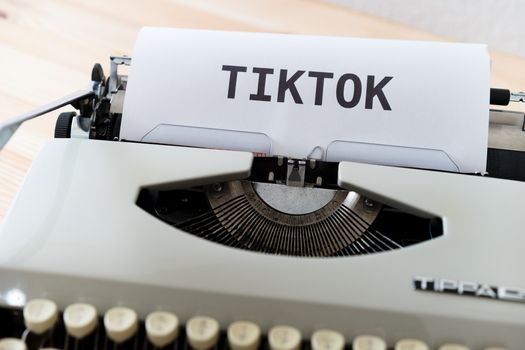
Content writing has come a long way from the days of ink-stained fingers and typewriters. For decades, the process was manual, time-consuming, and heavily reliant on individual creativity. The introduction of computers and word processors in the 1980s and 1990s streamlined writing and editing, while the rise of the internet transformed distribution, making global publishing instantaneous.
However, the real disruption began with the advent of AI-powered tools. In 2015, OpenAI’s GPT-2 demonstrated that machines could generate surprisingly coherent text. By 2023, over 60% of digital marketers reported using some form of AI-assisted writing, according to a Content Marketing Institute survey. Modern AI tools, such as GPT-4, Jasper, and Writesonic, now handle everything from brainstorming topics to drafting and optimizing articles. This evolution is not just about speed—it’s about redefining the creative process itself.
How AI Is Redefining Creativity and Human Collaboration
One of the biggest misconceptions about AI in content writing is that it seeks to replace human creativity. In reality, AI is enhancing it. Today’s AI models are trained on massive datasets, analyzing millions of examples to understand context, tone, and audience preferences. This allows them to generate content that is not only grammatically correct but also engaging and relevant.
For instance, AI can suggest creative headlines, propose unique angles for stories, and even tailor messaging for different demographics. In a 2022 survey by HubSpot, 53% of marketers said AI helped them brainstorm more effectively and break creative blocks. Human writers are freed from repetitive or formulaic tasks, allowing them to focus on strategy, storytelling, and nuanced analysis. The collaboration between human intuition and AI’s data-driven insights is creating richer, more diverse content than ever before.
AI-Driven Personalization: Transforming Reader Experience
Personalization has become the gold standard for digital content, and AI is making it possible at scale. In a world where over 4.9 billion people are online (Statista, 2023), generic content simply gets lost in the noise. AI tools analyze user behavior, location, browsing history, and past engagement to deliver hyper-personalized articles, product descriptions, and recommendations.
Netflix, for example, uses AI-generated synopses and customizes show descriptions for individual users. E-commerce platforms deploy AI to write product details that resonate with specific customer segments. According to a McKinsey report, companies that personalize digital experiences see revenue increases of 5% to 15%. For publishers, AI-driven personalization means higher engagement, longer time on page, and lower bounce rates—metrics essential for digital success.
Quality, Speed, and Scale: The New Metrics for Content Success
Traditionally, content writing was a balancing act between quality and quantity. AI is now making it possible to achieve both. The average AI writing tool can generate a 1,000-word article in under three minutes—a task that might take a human writer several hours. But speed is only part of the equation; AI tools are also optimizing content for SEO, readability, and accuracy in real time.
A 2023 survey by SEMrush found that websites using AI-generated content saw a 40% increase in organic traffic within six months. The ability to produce large volumes of high-quality content enables brands to dominate search rankings, respond to trends instantly, and maintain a consistent publishing schedule. For global organizations, AI can also translate and localize content, making it accessible to audiences in multiple languages with minimal human oversight.
Here’s a comparative overview of how AI-driven content writing stacks up against traditional methods:
| Aspect | Traditional Content Writing | AI-Driven Content Writing |
|---|---|---|
| Speed | 2-4 hours/article | 2-5 minutes/article |
| Personalization | Limited, manual | Automated, at scale |
| SEO Optimization | Manual, time-intensive | Automated, real-time |
| Scalability | Restricted by human resources | Virtually unlimited |
| Consistency | Varies by writer | High, algorithmic consistency |
| Translation & Localization | Requires specialists | Instant, multi-language support |
Challenges and Ethical Considerations in AI Content Writing
Despite its transformative power, AI-driven content writing is not without challenges. One major concern is the potential for plagiarism or the generation of factually incorrect information. While AI models are powerful, they sometimes “hallucinate” or fabricate facts, which can undermine credibility. A 2023 study by MIT found that 22% of AI-generated articles contained minor inaccuracies, compared to just 6% in human-written pieces.
Another pressing issue is the ethical use of AI in writing. As AI-generated content becomes more sophisticated, distinguishing between human and machine-written text can be difficult. This raises questions about transparency, authorship, and accountability. Should readers be informed when content is AI-generated? In 2022, the Associated Press began labeling AI-assisted articles to maintain transparency.
Additionally, there are concerns about job displacement. The World Economic Forum’s 2023 Future of Jobs Report predicted that AI could automate up to 44% of basic content production tasks by 2027. However, many experts argue that AI will create new roles focused on strategy, curation, and quality assurance rather than eliminating jobs outright.
The Road Ahead: AI as a Catalyst for a New Content Ecosystem
The paradigm shift brought about by AI in content writing is only beginning. As AI models continue to improve, we can expect even greater synergy between human and machine creativity. For instance, AI is now being used to analyze audience sentiment in real time, adapt content mid-campaign, and even create interactive, multimedia-rich stories that traditional writers could only dream of.
Furthermore, advancements in natural language processing (NLP) are enabling AI to better understand nuance, emotion, and cultural context. By 2026, it’s estimated that over 70% of online content will be, at least in part, AI-generated or AI-optimized (Gartner). This doesn’t mean the end of human creativity—instead, it signals a new era where the boundaries of what’s possible in writing are constantly expanding.
For businesses, embracing AI in content writing is no longer optional; it’s a necessity to stay competitive. For writers, it’s an opportunity to evolve, leveraging AI to amplify their impact, reach, and creativity. The real winners will be those who adapt, combining the best of both worlds to deliver compelling, insightful, and highly relevant content.