The Future of Collaboration between Humans and AI in Writing: How to Find Balance
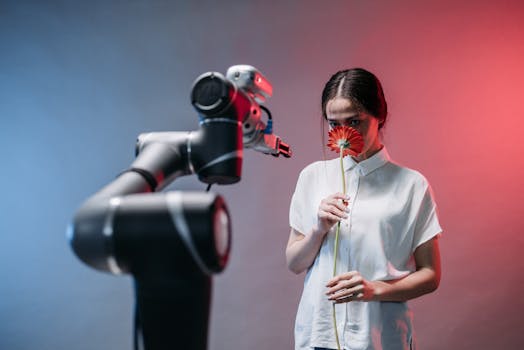
The digital age has ushered in an unprecedented collaboration between humans and artificial intelligence (AI), fundamentally transforming the way we write, communicate, and share ideas. As AI tools become more sophisticated, they are not just assisting with grammar or spelling—they are helping to generate headlines, draft articles, and even craft poetry. But as AI's influence grows, so does the question: How can we find the right balance between human creativity and machine efficiency in writing? This article explores the evolving partnership between human writers and AI, examining the opportunities, challenges, and potential frameworks for a harmonious future.
The Evolution of Human-AI Collaboration in Writing
To understand the future, it helps to look back. AI-powered writing assistance began with simple spellcheckers in the 1980s. By the mid-2000s, predictive text and grammar tools like Grammarly entered the mainstream, automating error correction and stylistic suggestions. Fast forward to 2024, and advanced AI models such as GPT-4 and Claude can generate entire articles, mimic authorial voice, and even analyze audience sentiment.
A 2023 survey by the Content Marketing Institute found that 53% of professional writers now use AI tools regularly, compared to just 18% in 2019. This rapid adoption is driven by the promise of increased productivity and reduced costs. Yet, human writers still play a crucial role in infusing content with nuance, emotion, and a unique perspective—qualities that AI, despite its progress, often struggles to replicate authentically.
The Strengths and Limitations of AI in Writing
AI writing systems excel at certain tasks: they can quickly analyze large datasets, generate drafts in seconds, and ensure consistency across documents. For example, Reuters reported that its news agency uses AI to produce over 3,500 financial news stories per year, freeing up journalists to focus on investigative reporting.
However, AI's limitations are equally important to recognize. While it can mimic tone and style, it lacks genuine understanding, emotional depth, and cultural awareness. A 2024 Stanford study found that 67% of AI-generated articles contained minor factual inaccuracies or lacked contextual nuance, compared to 21% for those written by humans. AI can inadvertently perpetuate biases present in training data and may struggle with creative leaps or ethical decision-making.
The following table highlights a comparison between human and AI strengths in writing:
| Aspect | Human Writers | AI Writing Tools |
|---|---|---|
| Creativity & Originality | High | Moderate |
| Speed & Scalability | Moderate | High |
| Emotional Intelligence | High | Low |
| Consistency | Moderate | High |
| Contextual Understanding | High | Moderate |
| Bias Detection | High (with awareness) | Low |
| Cost Efficiency | Moderate | High |
Where Human and AI Collaboration Thrives
Rather than viewing AI as a competitor, leading organizations now treat it as a collaborator. The most successful writing projects often blend human ingenuity with AI-driven efficiency. Several real-world examples illustrate this synergy:
1. $1 AI can rapidly scan the web for trending topics, relevant statistics, and competitor analysis. Human writers then use these insights to develop unique angles or narratives. According to HubSpot, teams using AI for research spend 44% less time on topic ideation. 2. $1 AI can produce an initial draft, which human writers refine for coherence, personality, and accuracy. This approach is popular among major media outlets and marketing agencies. 3. $1 AI translation tools accelerate the process of adapting content for global audiences. Human editors ensure that translations are culturally sensitive and contextually accurate. 4. $1 AI-driven grammar and plagiarism checkers streamline editing, while humans provide the final review to catch subtleties or errors that algorithms might miss.The future will likely see even deeper collaboration, with AI acting as a creative partner—helping writers brainstorm, overcome blocks, and expand their expressive range.
Ethical Considerations and the Human Touch
As AI's role in writing expands, so do ethical concerns. Transparency, accountability, and originality are key issues. Should readers be informed when a piece is AI-generated or co-written? How can we ensure that AI does not propagate misinformation or reinforce harmful stereotypes?
According to a 2023 Pew Research Center survey, 62% of Americans believe that AI-generated content should be clearly labeled. Meanwhile, academic publishers are updating guidelines to address AI's role in authorship and plagiarism.
The human touch remains essential in navigating ethical gray areas. For example, a human editor is more likely to recognize when satire crosses into offensiveness, or when a creative work borrows too heavily from its sources. Human oversight also ensures that sensitive topics are handled with empathy and care—a challenge for even the most advanced AI.
Strategies for Finding the Right Balance
To harness the best of both worlds, organizations and individual writers need clear frameworks for collaboration. Here are some practical strategies:
1. $1 Assign AI tools to repetitive or data-heavy tasks, while reserving creative, strategic, and ethical decisions for human writers. 2. $1 Encourage writers to develop AI literacy, so they can leverage technology effectively without feeling threatened by automation. 3. $1 Implement workflows where all AI-generated content undergoes human review before publication—especially for high-stakes or sensitive material. 4. $1 Clearly label AI-assisted content, and communicate openly with audiences about the tools and processes used. 5. $1 Regularly audit AI outputs for factual accuracy and potential bias, and update training data as needed to reflect evolving standards and values.These strategies not only ensure quality and authenticity but also build trust with readers—an increasingly valuable asset in the information age.
Preparing for the Next Decade of Human-AI Writing Partnerships
Looking ahead, the collaboration between humans and AI in writing will only deepen. By 2030, the World Economic Forum predicts that 85 million jobs may be displaced by automation, but 97 million new roles—many involving human-AI cooperation—will emerge. In writing and content creation, this means more specialized roles: AI prompt engineers, creative editors who fine-tune machine drafts, and ethicists who oversee responsible content generation.
Emerging technologies may also enable new forms of creative expression. Imagine interactive stories shaped in real-time by both human authors and AI, or personalized learning materials tailored to individual reading styles. The key challenge will be to maintain the distinct value of human perspective while embracing the efficiencies and possibilities of AI.
Writers and organizations that proactively adapt—by upskilling, experimenting, and setting clear ethical boundaries—will be best positioned to thrive in this new landscape.